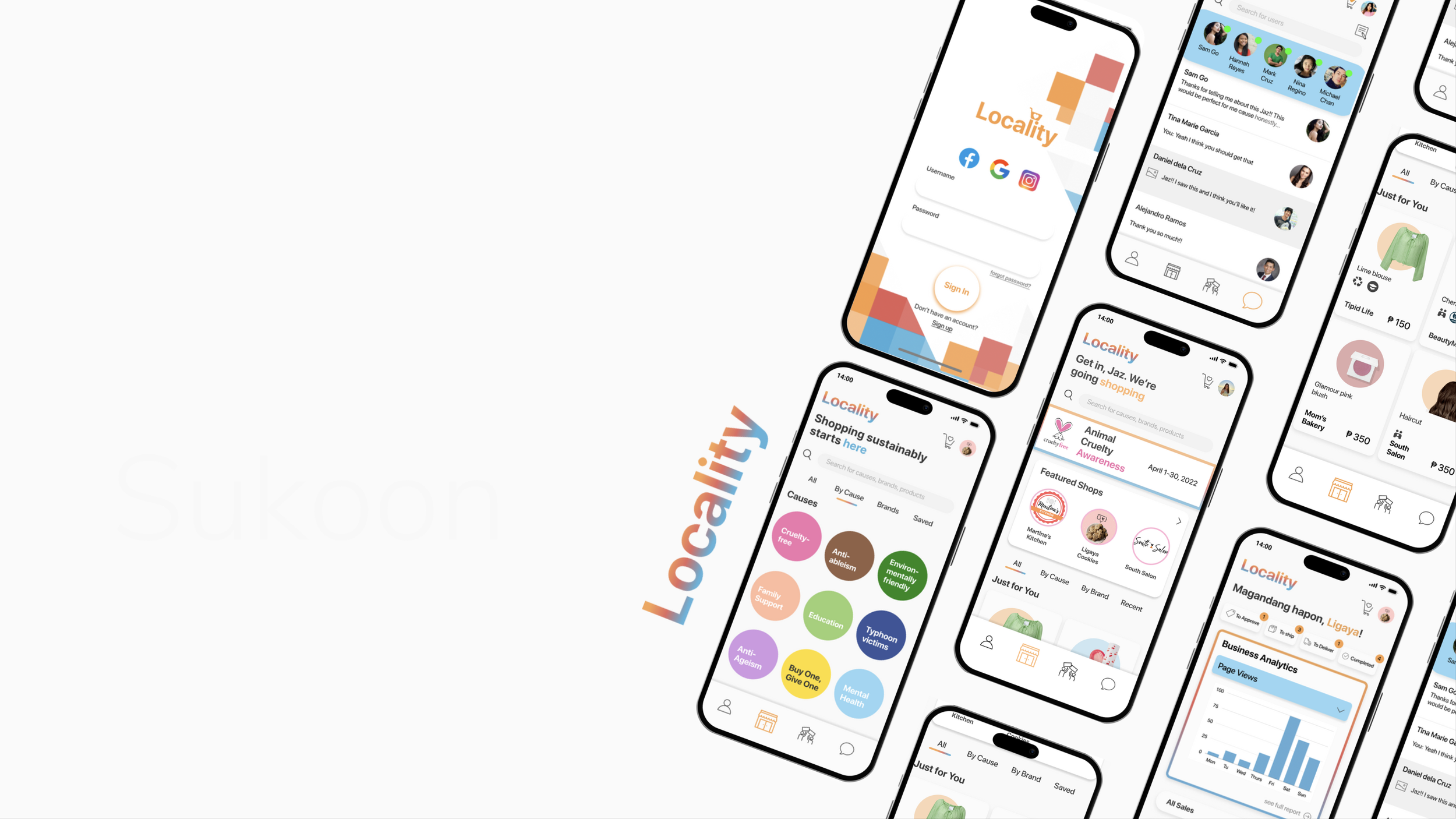
A Cause-Centric Marketplace
Locality champions local businesses in a saturated
e-commerce landscape
As the UX/UI Designer lead, my goal was to create a platform for local business owners to pursue their passions but at the same time encourage people to build shopping habits that lean towards conscious consumerism. This includes reducing the carbon footprint, promoting cause-branding, and raising awareness on the importance of sustainable shopping.
The result: A High-Fidelity prototype for a multi-sided platform (MSP) accessed via a mobile application that provided a space for local businesses to connect with customers within their area (B2C) and with other business owners (B2B).
Timeline
September 2021 - Initial ideation
December 2021 - Presentation
Project Type
Capstone Project (Mobile E-commerce Platform)
Tools
Figma
Platform
Mobile App
-
Current mega e-commerce platforms actively suppress cause-driven local micro-businesses by failing to provide the validation and community necessary for consumers who shop based on ethical and sustainable values.
The dominant e-commerce landscape is structurally hostile to local entrepreneurs, who struggle to compete on price against mass production. This frustrates the Gen Z and conscious consumer segment who prioritize ethical sourcing and sustainability but lack a unified, trusted platform to find verified sellers. My capstone project sought to solve this by creating a platform that moves beyond transactional efficiency to enable genuine, value-based connection, driving both seller visibility and sustainable shopping behavior. -
Locality is a mobile marketplace prototype designed to validate and elevate these local sellers, functioning as a dedicated hub for cause-based commerce that promotes local sourcing and reduces the carbon footprint.
-
Platform Scope: The capstone project delivered the complete B2C customer-facing mobile application prototype (one side of the Multi-Sided Platform), fully simulating the core shopping and community experience.
Time Constraint: The project was executed under the strict one-semester academic deadline, focusing on design integrity and functional validation rather than live development.
Technical Challenge (Self-Imposed): The design required a robust and scalable Mission Validation and Tagging System—a complex IA challenge—to establish consumer trust in sellers' cause claims.
Project Goals
Validate Market Need
Confirmed through research that the platform addresses a significant, demonstrable gap in the market for cause-based commerce.
Enhance Discoverability
Developed an effective and elegant solution that makes cause-based filtering the central, usable feature of the entire marketplace.
Demonstrate Mastery
Complete a comprehensive project, successfully integrating UX principles like deep qualitative research (local business connection) and high-fidelity interactive prototyping.
Discovery & Research
Key Success Metrics
Success depended on two factors:
1. Creating a space for community where sellers and customers can connect over shared missions, and
2. Designing intuitive cause-related filters that enable consumers to shop by value, not just product category. This proved the need for a dedicated Mission Feed and a specialized Information Architecture.
Data Synthesis & Problem Validation
My research methodology focused on In-depth Interviews with local business owners and Competitive Benchmarking to inform the design strategy, grounding the prototype in authentic user needs.
Information Architecture: The Four Pillars
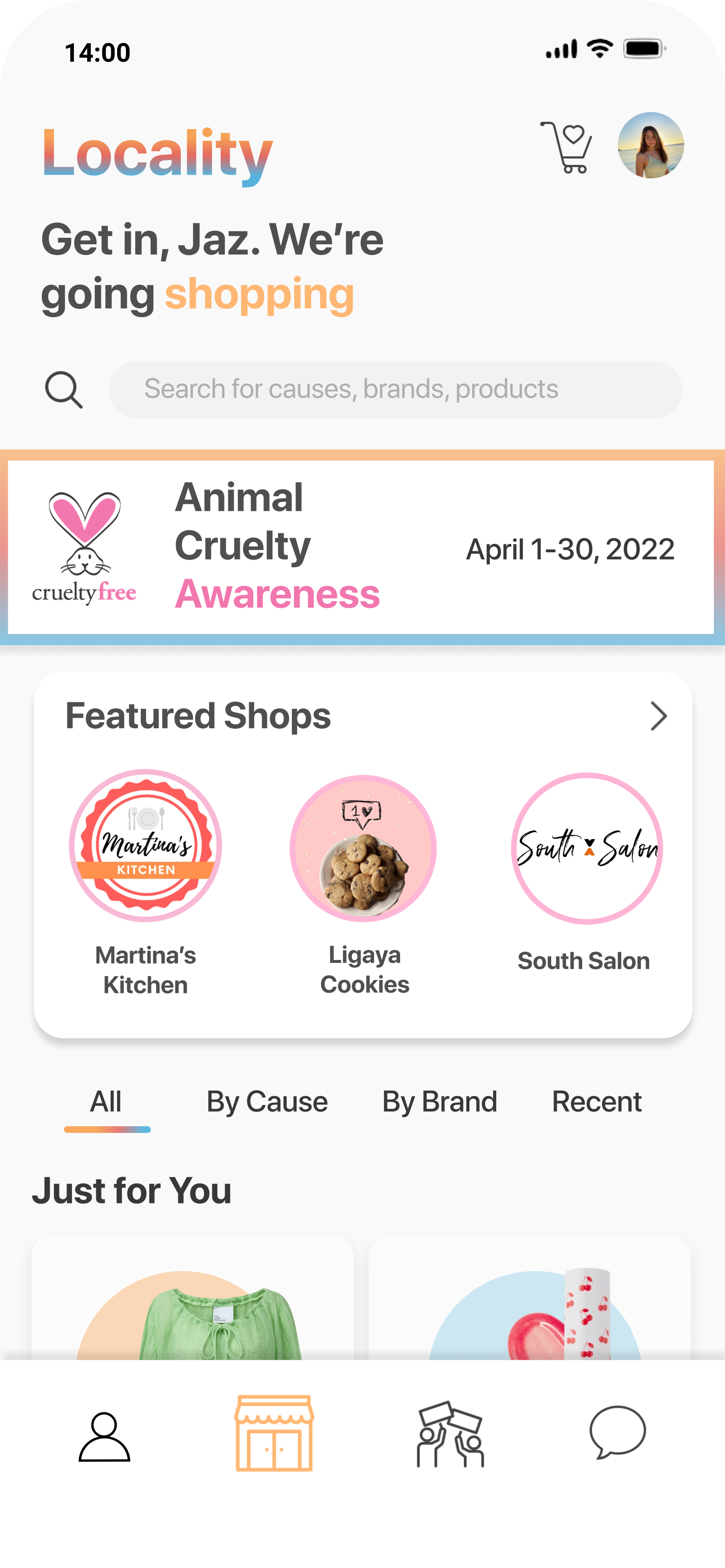
Shop
A centralized space to shop by all products or by cause and brand. Banners feature the “cause” for the month and also featured shops based on that cause.
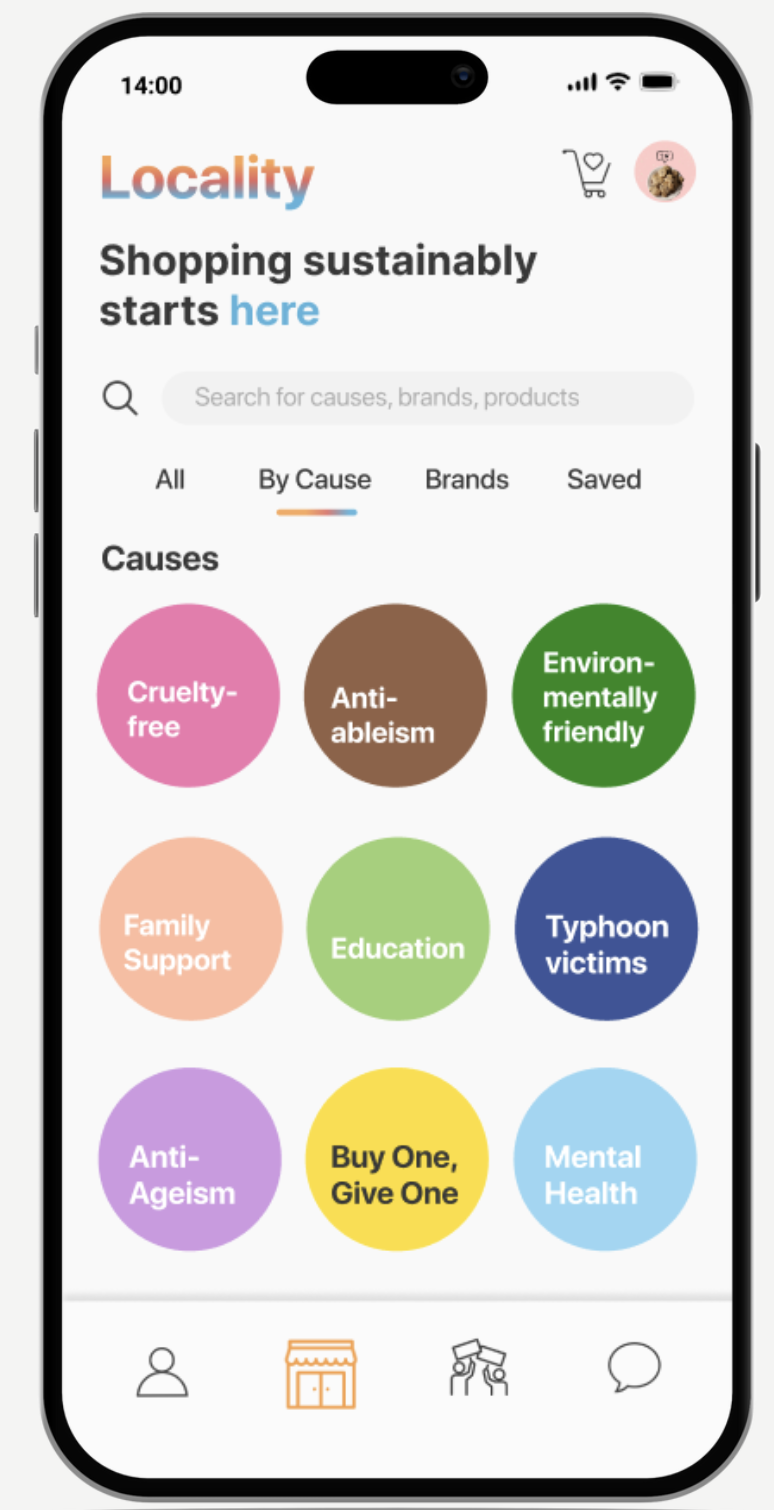
Cause-Centric Filters
Filters are optimized to show specific causes that they could support which will then list products under that badge. Additional filters include shopping by brand or saved shops/causes.
Profile
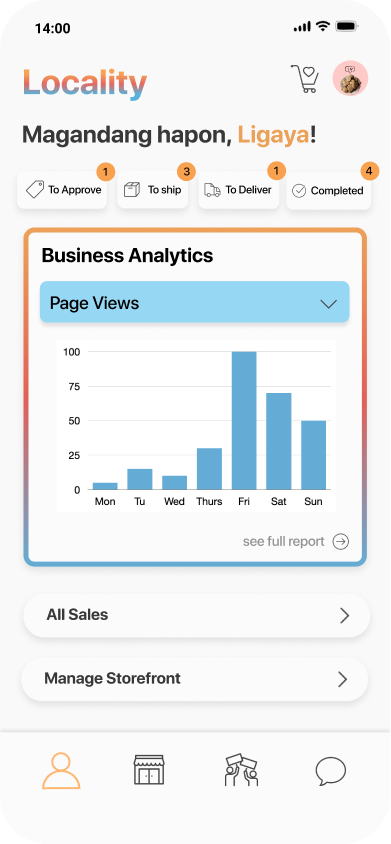
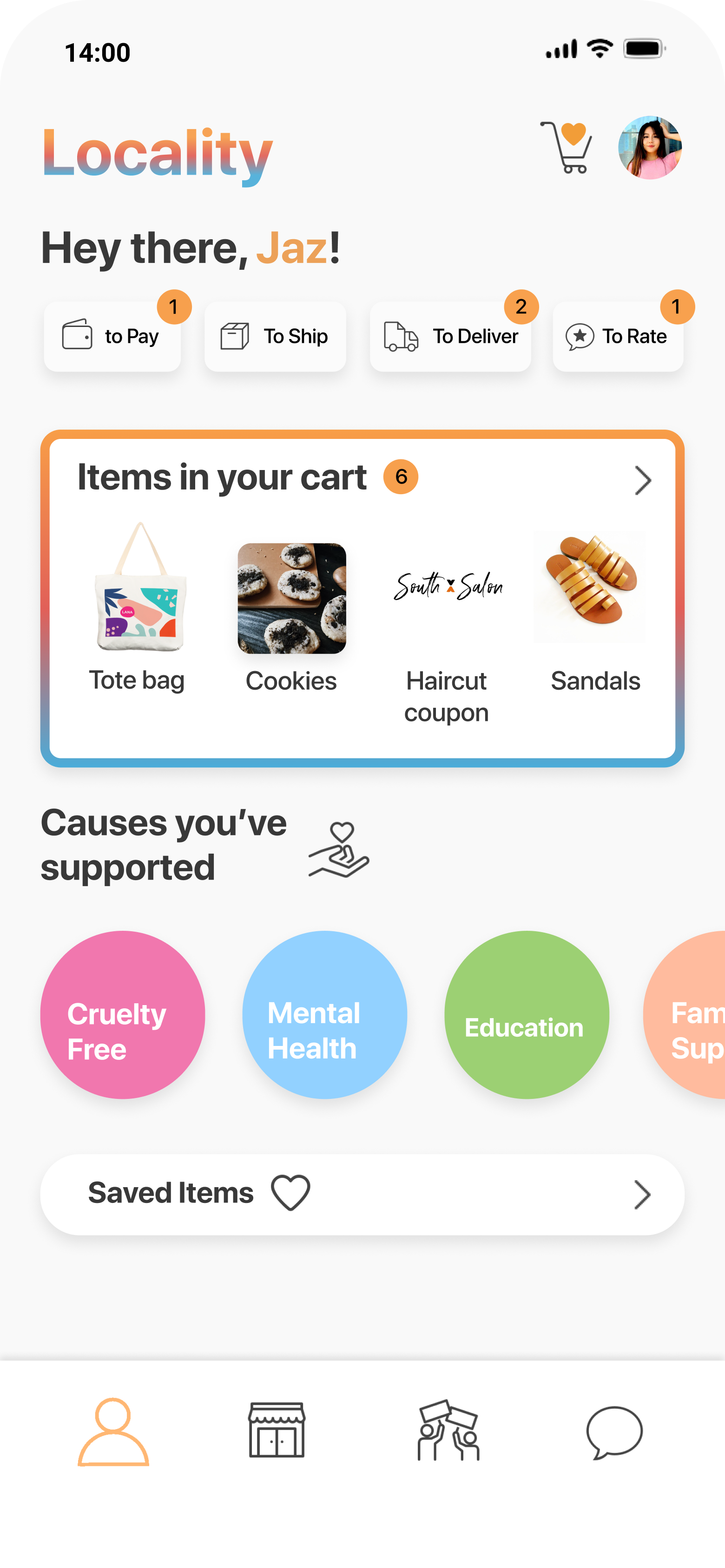
For Customers, it is a space to track their orders, cart and saved items, and the causes they support based on previous searches/purchases. For Businesses, it’s a way to track shop analytics.
Community
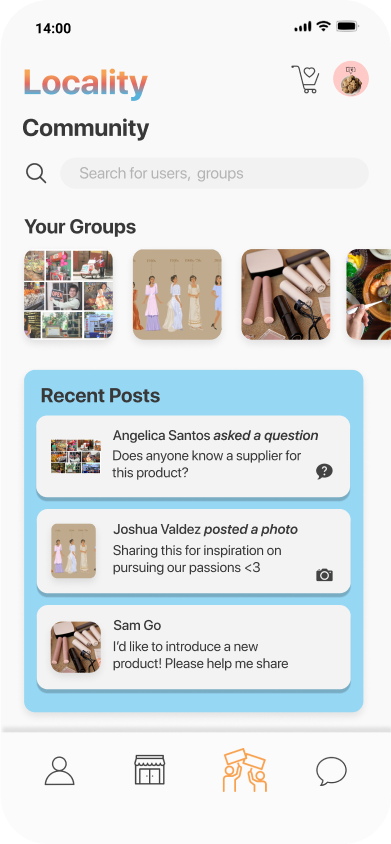
A space to find niche groups to connect either and share products. There is also an option for direct messages to the community. This fosters the connection between businesses and customers.
Ideation & Design
Project Proposal
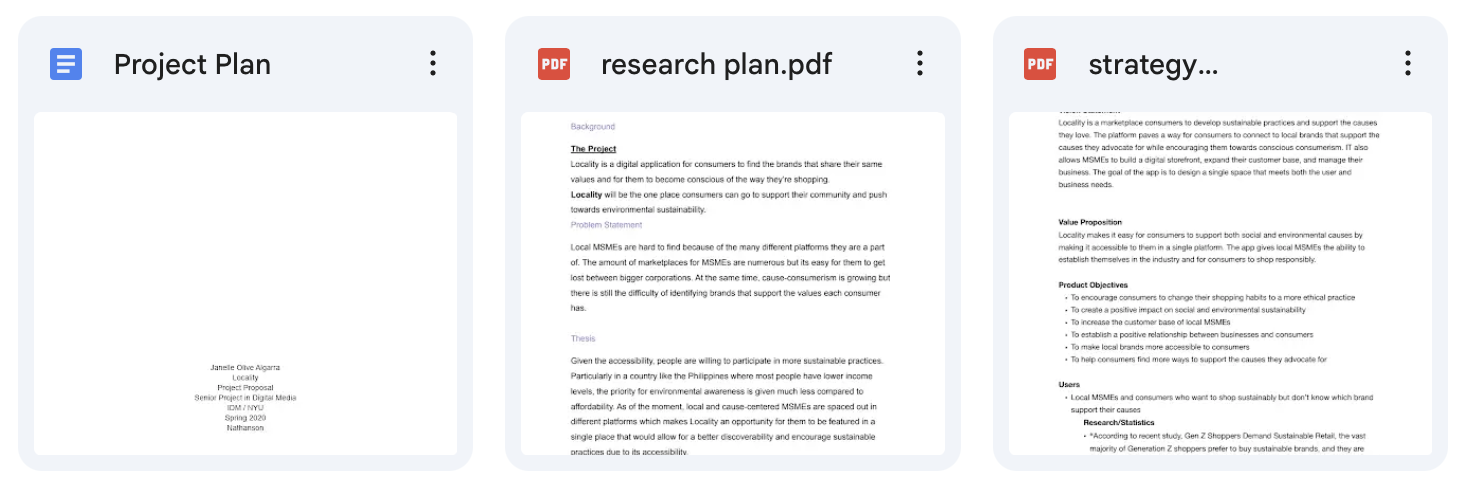
To justify the project, I created a project proposal, strategy document, and research plan that details the goals, competitive analysis, value proposition, and methodology plan among others.
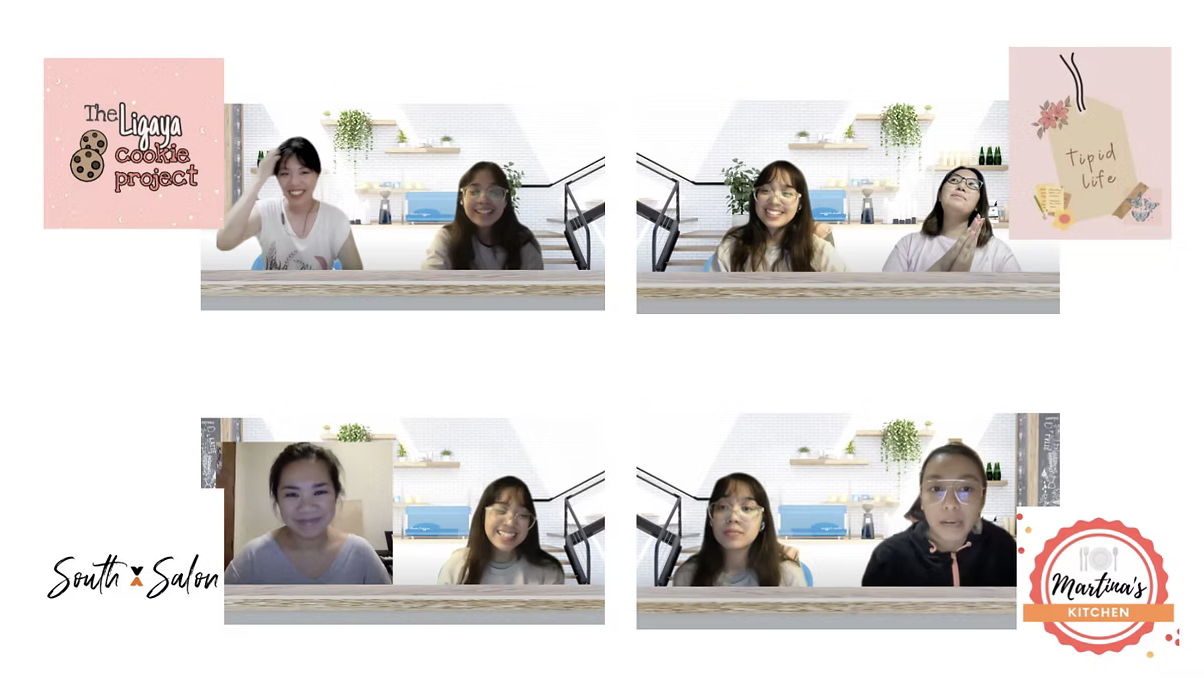
Conducted in-depth interviews with real, local business owners in the Philippines to identify their challenges and pain points amidst the growth of e-commerce.
User Research
Low-Fidelity Wireframes
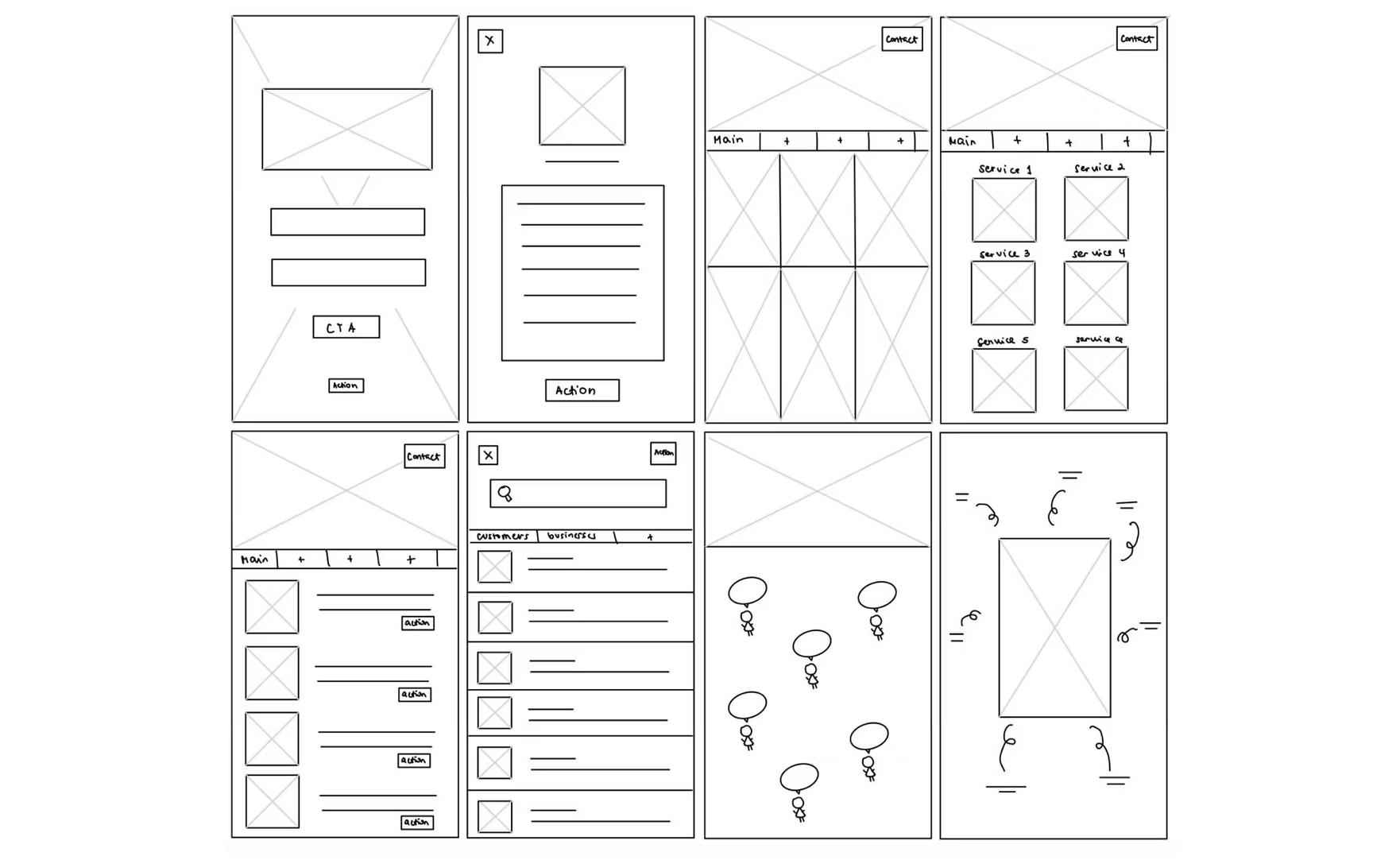
The first wireframes give a rough sketch of the initial concept for the project. It includes visualizations of the community space and the layout of the shopping page.
Medium-Fidelity Wireframes
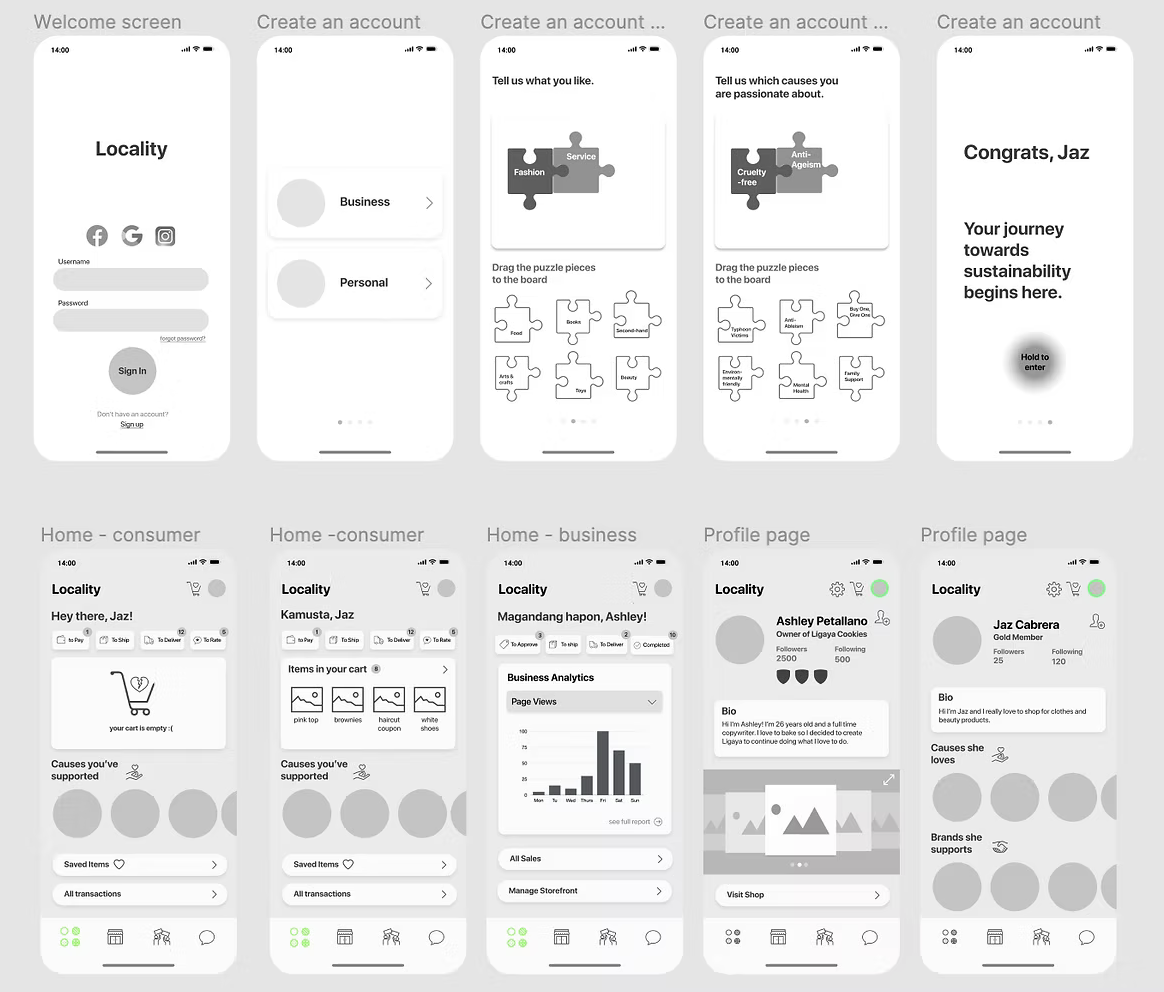
Focused on the end-to-end process, starting with the login/sign-up pages to the actual platform. It was important to create a foundation of all pillars and to draw the user journey effectively.
Final Product Walkthrough
Rationale for Sign Up Design
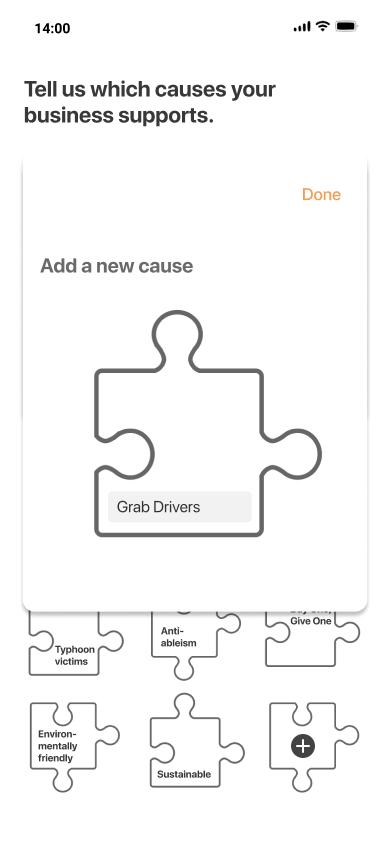
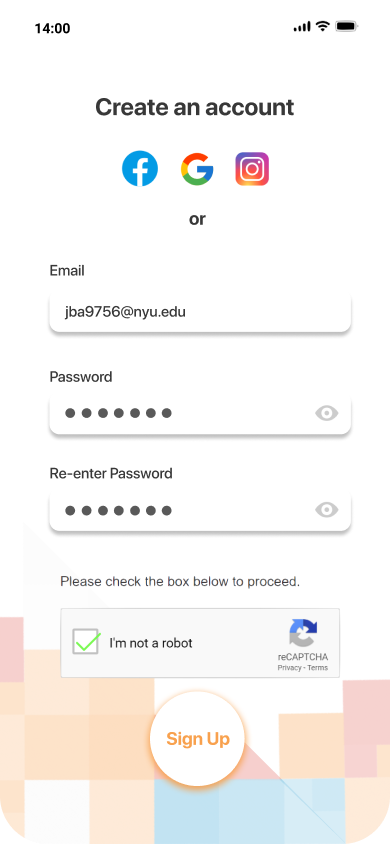
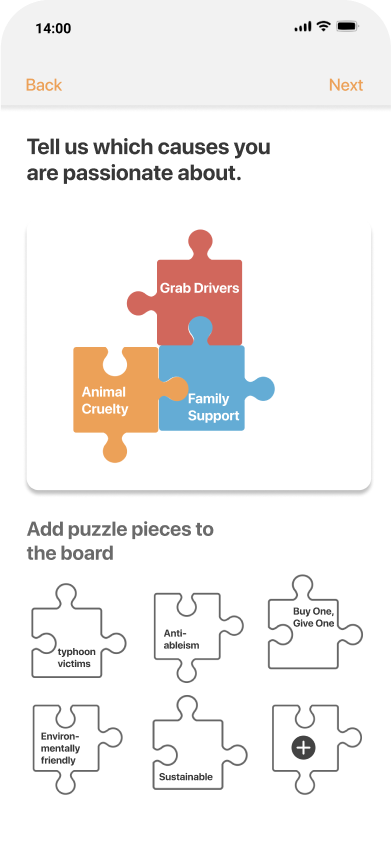
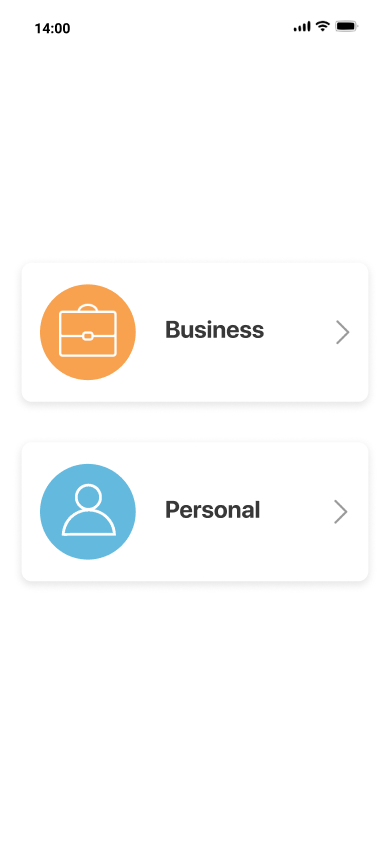
I wanted to create a gamified sign up for new users that also captured their underlying intents. Since the app focuses on cause-centrism, the prompt focuses on informing the platform which causes they are passionate about. It also gives the flexibility of adding a particular cause that may not be widely known.
Doing this will then inform the app’s algorithm upon entering on which interests they have, and thus, personalize the experience from the beginning.
Rationale for Profile Design
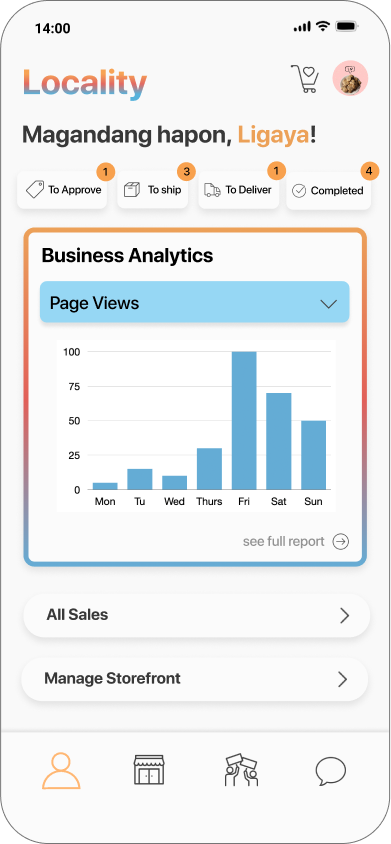
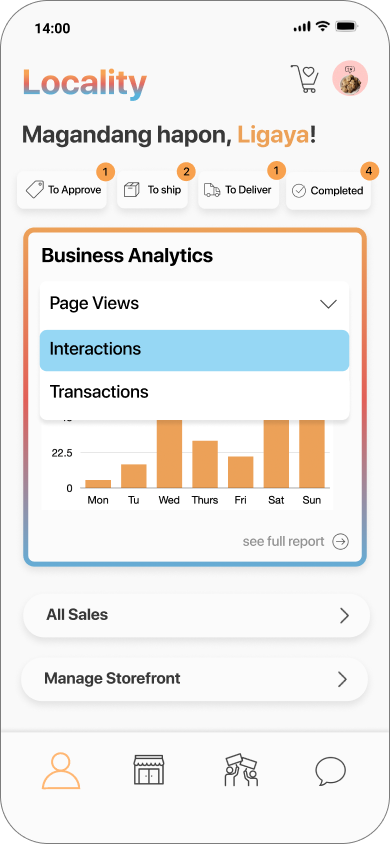
Naturally, Business and Customer accounts would have different interfaces. For businesses, it was important to include all the necessary information to run their shop. I also wanted to include the analytics of their shop so they can strategize their marketing campaigns effectively.
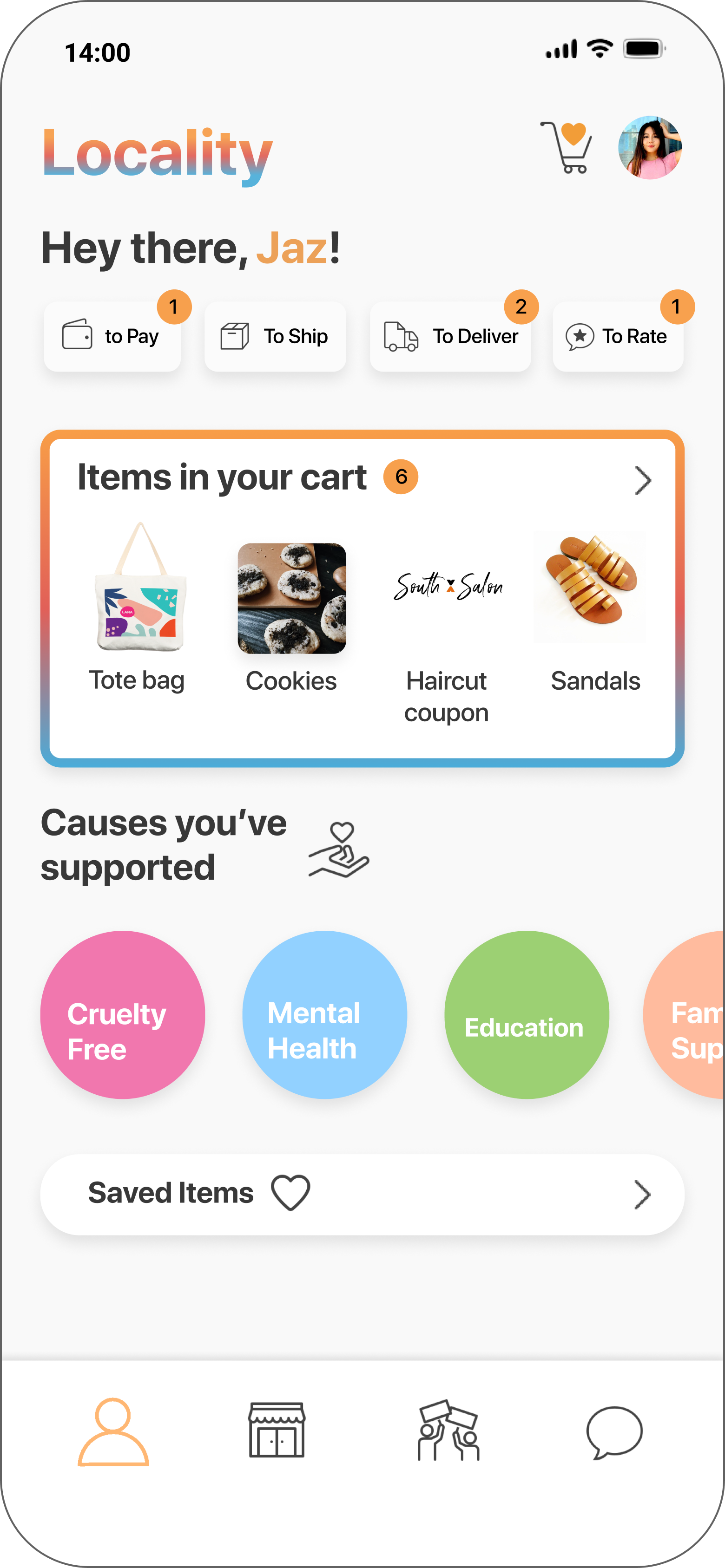
For Customers, what is important is the information on their orders. I also wanted a visualization of the items in their cart to be upfront to encourage them to checkout. Lastly, again focusing on the conscious consumerism, the causes they’ve supported are also featured as badges.
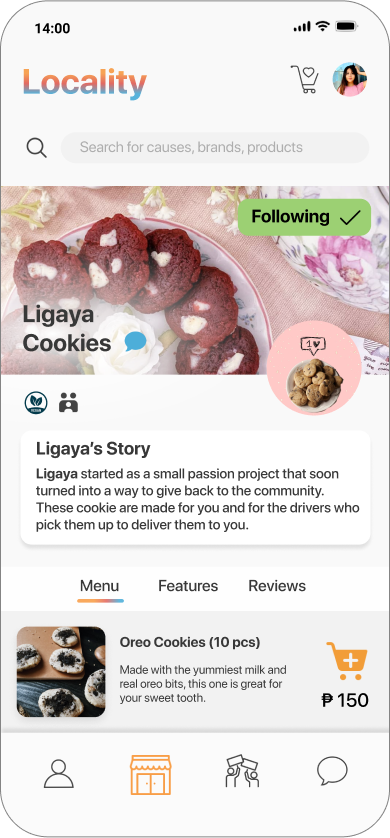
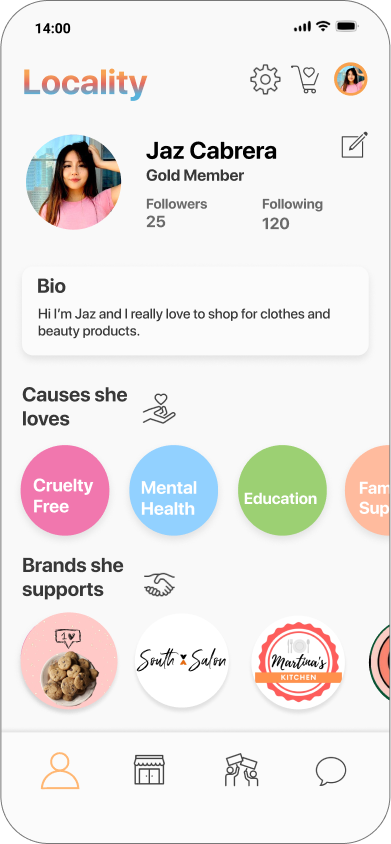
Another important feature is the business’s page and the customer’s public profile. The storefront is there to allow businesses to market their products in a centralized space and for customers to discover a range of products from their favorite brands. Whereas the profile page is for community purposes.
Rationale for Shop Design
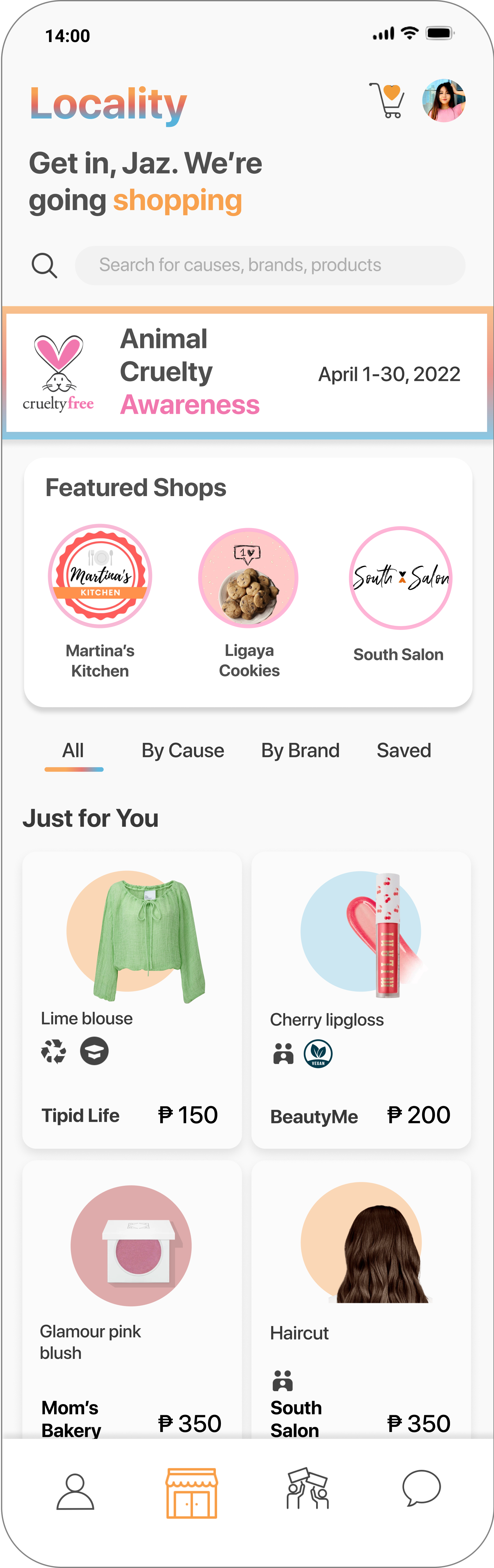
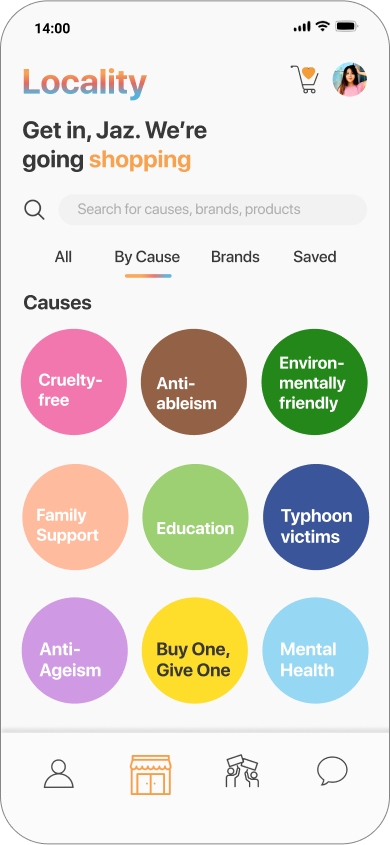
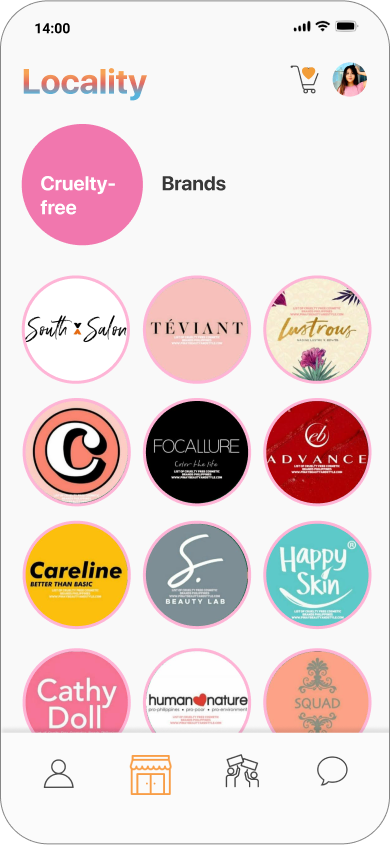
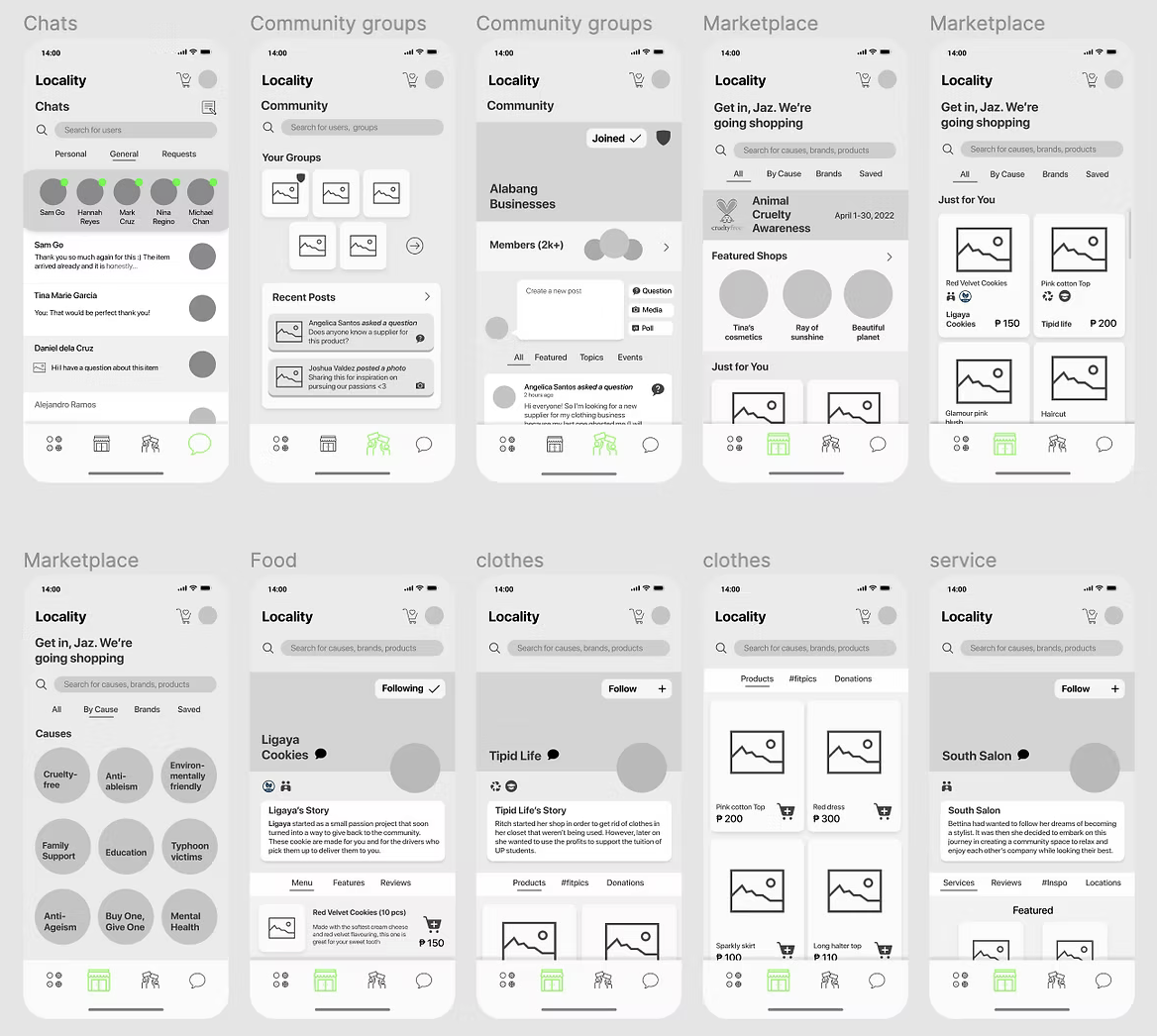
The shop utilizes an interface reminiscent of other e-commerce platforms as to not stray far from the online shopping behaviors of customers. What is unique is that the banners feature the chose “cause” of the month and recommends featured shops based on that cause.
An emphasized feature of the project is the filters by cause. As shown, upon clicking a cause, the shop shows brands that have products supporting that cause.
Rationale for Community Design
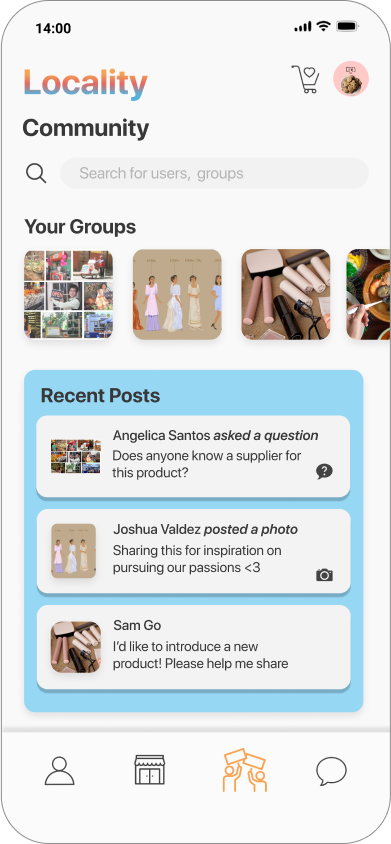
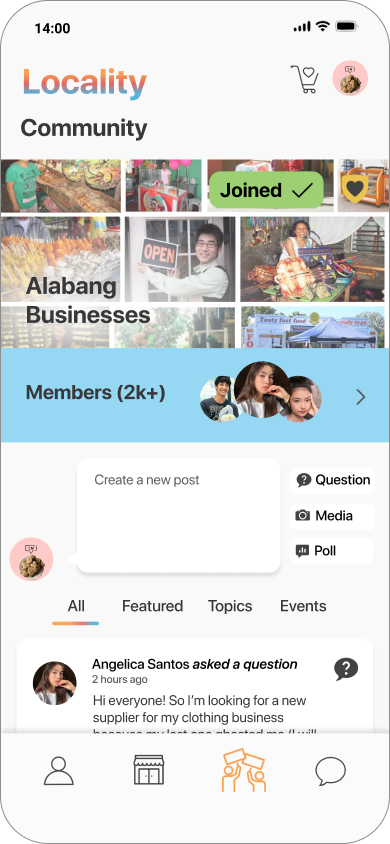
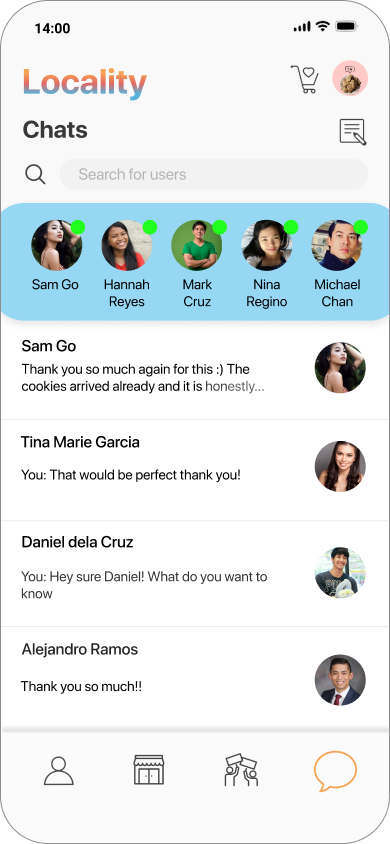
Community was one of the biggest pain points for business owners. They felt that there was not single space to talk to other business owners and also talk to their customers. The idea is to have groups in the platform that both business owners and customers can join to either sell, recommend, or get recommendations for products and possibly suppliers.
Private chats are also available for one-on-one conversations with other members or businesses.
Key Learnings & Next Steps
Designing for Dual User Journeys (Multi-Sided Platform)
Successfully mapped the core functionality (shopping, browsing, community, chat) across two divergent user roles to ensure both supply and demand side value.Translating Abstract Missions into Concrete UI Features
Designed features that allowed users to "shop and browse online by brand and cause," making the platform's social mission central to the navigation and search experience, thus driving the desired shopping habits.Research-Driven Feature Prioritization (Addressing MSME Pain Points)
Used this insight to prioritize features that simplified digital presence (the digital storefront) and fostered trust/virality (the community groups and chat function), directly addressing the established user pain points.Mastery of the End-to-End UX Process
Successfully executing the complete design lifecycle: User Research → Low-Fidelity Wireframes → Medium-Fidelity Wireframes → High-Fidelity Prototype using industry-standard tools like Figma and Photoshop. This confirms proficiency in taking a project from discovery to a polished, validated design artifact.
Create the Actual App
Though this project was created in 2021, the data today shows that people are still leaning towards conscious consumerism, with 80-89% of global consumers are willing to pay more for eco-friendly products (According to an article on PWC, 2024). Executing this app and tailoring it to Gen Z’s can target the gap in local businesses especially since Gen Z’s have more purchasing power now.Integrate Proactive Sustainability Metrics
Designing a visual system to show the user the estimated carbon footprint saved by purchasing locally can reinforce the project's core value proposition.Explore AI in Marketing
Using Generative AI (like a small-scale, tailored LLM) within the business account interface. A business owner could upload a picture and a few keywords, and the AI instantly drafts Product Descriptions, Social Media Captions, Chatbot Responses.Loyalty and Membership Programs, Reward System
Introduce tiering for customer engagement that rewards them for continuous use of the platform.